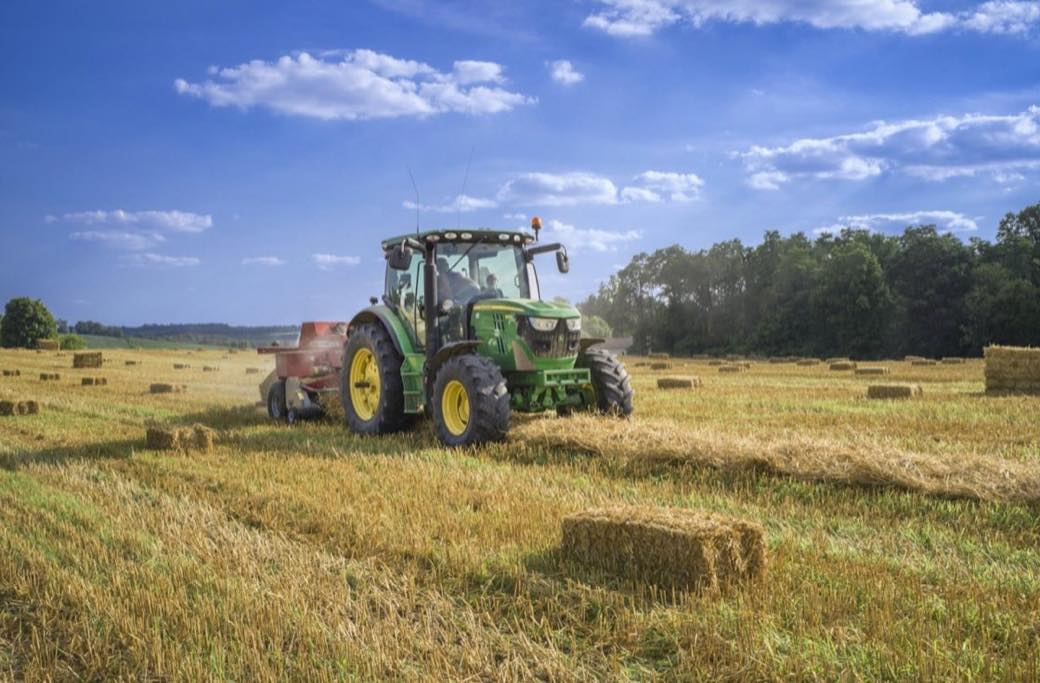
A row crop gets sprayed a handful of times and then it is harvested and gone, and the season's paperwork ends with it. An apple block does not work that way. The same trees stand in the same rows for a decade or more, taking pass after pass across a season that runs from dormant spray to the last cover before pick, and every one of those passes opens its own re-entry window and its own countdown to harvest.
That is the thing about tree fruit that a single-season crop hides: the record does not close at the end of one application. It accumulates, block by block, pass by pass, and by August a bearing orchard can be carrying several open windows on several different clocks, on blocks that are picked on different days. This page is about keeping that straight — not about what any interval is, but about the discipline that lets a many-pass season stay legible.
The label is the authority. Nothing here states a re-entry interval or a pre-harvest interval for any product, on apples or any other crop, and you should be wary of anything that does. Those intervals are set by the product label and by the regulator and certifier who govern your operation; they vary by product, by rate, and by jurisdiction, and they change between seasons. What follows is about the process of recording an orchard spray program. For the interval itself, read the label on the product you are actually holding.
The season is a sequence of records, not one
It helps to stop thinking of "this year's spray program" as a single document and start thinking of it as a stack. A dormant oil pass in early spring, a fungicide pass timed to a scab infection period, an insecticide pass timed to a moth flight, a summer cover, sometimes a thinning or a growth-regulator application — each one is its own event, with its own product, its own rate, its own re-entry interval, and its own pre-harvest interval. None of them inherit anything from the pass before.
The practical consequence is that a block's true status on any given day is whatever the most restrictive open window says it is, and that status can only be read off the stack of individual records, not off a memory of "we sprayed a few weeks ago." A crew scouting on a Tuesday needs to know whether Tuesday sits inside a re-entry window from last Thursday's pass. That is a lookup, not a guess, and it only works if last Thursday's pass was written down with its own end date the day it happened.
Block identity is what makes any of this usable
A perennial planting does not reset each year the way an annual field does, and it does not spray uniformly either — different blocks bloom on different schedules, carry different pest pressure, and get picked on different dates. A spray record that says "the orchard" cannot distinguish a block sprayed yesterday from one sprayed three weeks ago, and that distinction is the entire point of tracking a re-entry or harvest window at all.
So the block, not the farm, is the unit the record has to attach to — named or numbered precisely enough that a pass applied to the north block does not accidentally read as covering the south block too. This is the same discipline described at greater length in what belongs in a spray record, and it matters more here than almost anywhere else, because an orchard is the case where two adjoining pieces of ground can legally be in two different states on the same afternoon.
The pre-harvest clock runs into a window you don't control
Field crops mostly get to choose when they're mature. An orchard's harvest window is set by the fruit, by the buyer's pick date, by weather, and by labor availability, all arriving roughly at once — and the pre-harvest interval from a late-season cover spray has to clear before any of that. Say, hypothetically, a late cover goes down and the label attaches a pre-harvest window measured in days: if the crew's planned pick date falls inside that window, the record is what tells you before the bins show up, not after.
This is where a late-season spray decision becomes a scheduling decision, and why the two have to be made by the same person looking at the same record. A pass applied without checking the planned pick date against the label's interval is a bet that the schedule will move rather than the spray plan. Sometimes that bet is fine. It should never be an accident.
What a per-pass orchard record has to carry
- The block, named precisely enough to distinguish it from its neighbors.
- The product and its active ingredient, with the rate actually applied and the lot number.
- The target — scab, a specific insect, mites — so the application can be shown to have been on-label for the reason it was made.
- The date and time, which is what every downstream interval is measured from.
- Both intervals from the label, and the calendar date each resolves to for that block and that pass — not a general sense of "should be fine by pick."
A season's worth of these, kept per block and per pass, is what lets anyone — a picking crew lead, a certifier, an auditor a year later — answer "is this block clear to enter, and is this block clear to harvest" without having to ask the person who did the spraying, who may by then be on a different farm.
Where the orchard record has to live
None of this is unique to fruit — it is the same obligation described in the spray and input records cluster generally, and it shares its shape with vineyard block records, which face the same many-pass, long-PHI problem on a different crop. What's specific to an orchard is only the volume: more passes, more blocks, more overlapping windows in a single season than a row crop ever accumulates.
Farm40 gives you an input application record where the block, the active ingredient, the rate, the lot number, and both intervals are first-class fields, and it computes each end date from the interval and the application date you enter, so a block's status is a lookup rather than a memory. Its limit sits in the same sentence: it can only compute from what you type in, it does not read the label for you, and a wrong interval entered at the sprayer produces a confidently wrong end date. The record is only as good as the number that went into it.
What makes an orchard's spray records defensible in the end is not software of any kind. It is that every pass, on every block, gets written down the day it happens, with both intervals and both end dates attached — so that by August, when three blocks are carrying three different windows, the record can say which is which without anyone having to remember a season that started in April.