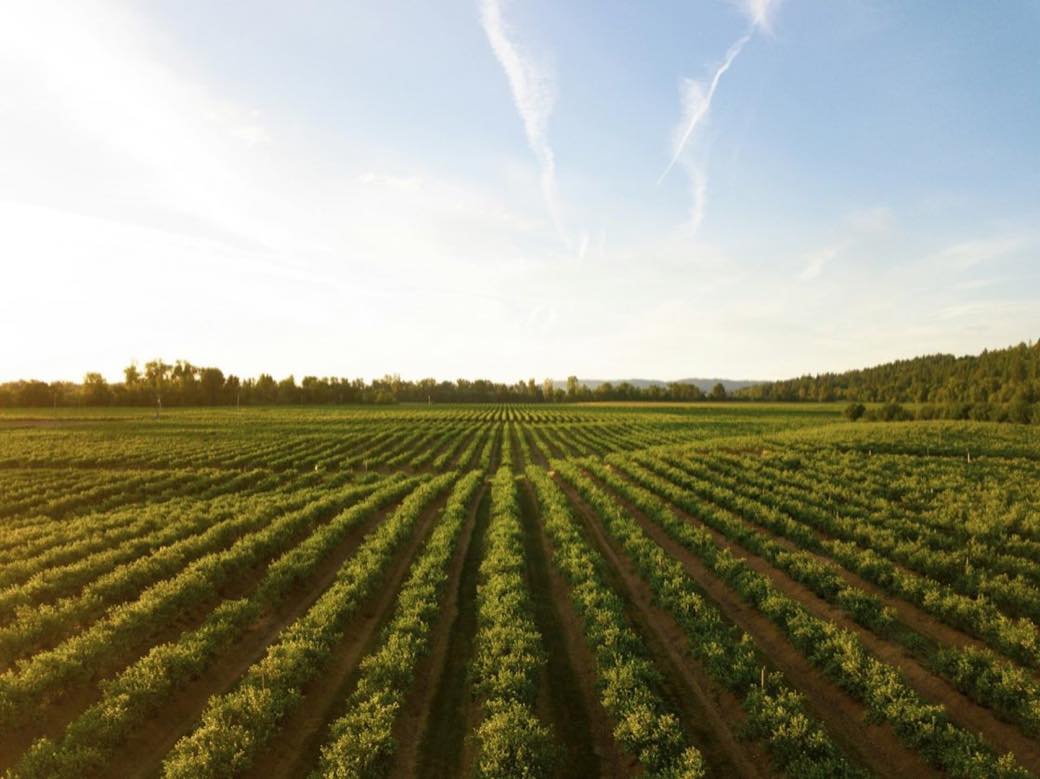
A cover crop is a strange thing to keep a record of, because nothing about it triggers the instincts that make farms write things down. There is no sale at the end of it, no customer asking for a lot number, usually no buyer’s form demanding proof it existed. It goes into the ground, does its job, and gets terminated, and none of that produces the kind of paper trail a cash crop generates automatically.
That absence of pressure is exactly why cover crops are the most commonly missing entry in an otherwise complete set of crop records. And it is a real gap, not a cosmetic one, because a cover crop still did everything a cash crop does to the field itself: it occupied the ground for a season, it usually consumed a seed purchase, it may have received an input, and its termination date marks a real transition in the field’s history that the next planting depends on.
A crop you never sell still belongs in the rotation
The purpose of a rotation record, described at length in the rotation records page, is to give a field a continuous history — what grew here, in what order, across years. A rotation record that only logs cash crops has a hole in it every year a cover crop occupied the ground, and that hole is not neutral. It makes the field look like it sat idle in years it was actually doing productive rotation work, and it removes the exact evidence a certifier or a future agronomic decision would want: what species covered this ground, and for how long, between cash crops.
Treat a cover crop planting exactly like any other entry in the field’s history — the same field or block identifier, the same date discipline, so the rotation record reads as one continuous chain rather than a cash-crop-only list with silent gaps.
A cover crop is still a use of the field, not a gap in it
It helps to drop the framing that a cover-cropped year is a year the field “wasn’t doing anything.” It was building organic matter, suppressing weeds, or holding soil — real agronomic work that a rotation review or a future buyer may care about as much as a cash crop’s yield. Recording it with the same seriousness as a cash crop is simply treating that work as real, which it was.
Termination is a date that matters as much as planting
A cash crop's record centers on planting and harvest — two clear events with obvious dates. A cover crop's record centers on planting and termination, and termination is easier to let slide because it often isn’t a single sharp event. A cover crop might be mowed, tilled in, grazed, or simply winterkilled, and each of those has a different date and a different practical meaning for what the field is ready to receive next.
Write down not just that the cover crop ended, but how and when. The method matters because it changes what residue or biomass the next planting is going into, and the date matters because it is the boundary between one crop’s record and the next one’s — exactly the kind of transition that a certification review will ask about if the cover crop is part of a certified rotation plan.
Inputs applied ahead of a cover crop are still real inputs
Farms that are diligent about recording every spray or amendment on a cash crop sometimes stop being diligent the moment the crop in question is a cover. An amendment spread ahead of a cover crop, or a burndown applied to terminate one, is exactly as real an input event as anything applied to a crop headed for sale, and it belongs in the same input log for the same field.
This matters beyond tidiness. The field’s complete input history — every product, every rate, every date, regardless of which crop it touched — is what a spray and input record cluster is supposed to represent. An input history that quietly skips whatever touched a cover crop is not a complete history of the field; it is a complete history of the field’s cash crops, which is a different and thinner document.
Seed source still matters even without a harvest
A cover crop seed purchase rarely gets the same scrutiny as cash crop seed — nobody asks for a lot number on a bag of cereal rye. But the same reasoning that makes seed lot traceability matter for a cash crop applies here in a smaller way: if a seed lot has a germination problem or a contamination issue, the record of what field it went into and when is the only thing that lets you connect the dots, whether or not that crop was ever going to be sold.
It does not need the same weight as a cash crop’s seed record. It needs to exist — the species, the source, and roughly when it was bought — as a line in the same log, not a fact kept only in memory because “it’s just a cover crop.” That is the whole argument of keeping a crop year on the record: the value is in the links between entries, and an entry that never got written cannot be linked to anything.
The same logic applies to a mix. Many cover crops are planted as blends of several species, and the temptation is to record only the blend name rather than what it actually contained. If the mix is ever a factor in a later question — a species that reseeded unexpectedly, a legume component relevant to a nitrogen credit — the blend name alone will not answer it. Keep whatever the seed tag or invoice specifies about composition, not just the commercial name of the product.
Recording it costs less than the gap it prevents
None of this requires more discipline than recording a cash crop — it requires the same discipline applied without the exemption that “nothing gets sold” quietly grants in most farms’ heads. A cover crop planting record is one more line: field, species, seeding date, termination date and method.
Farm40 lets a cover crop be entered as its own planting record against the same field, so it shows up in that field’s history and in the rotation view alongside every cash crop that shared the ground. The limit is the same one that applies to every record in the system: Farm40 shows you the rotation you entered, gap-free only if you entered the cover crop the same way you entered everything else. It cannot infer that a field was covered in a year nobody logged it, and a blank year in the record reads exactly like a blank year in the ground — even when it wasn’t.
Set the standard now, before the next cover crop goes in: it gets the same field identifier, the same planting-record fields, and the same expectation of a termination entry as any cash crop you would never think to skip. The record does not need to be elaborate. It needs to exist every year the ground was covered, which is the one condition a farm-level intention to “remember to log it” almost never survives.