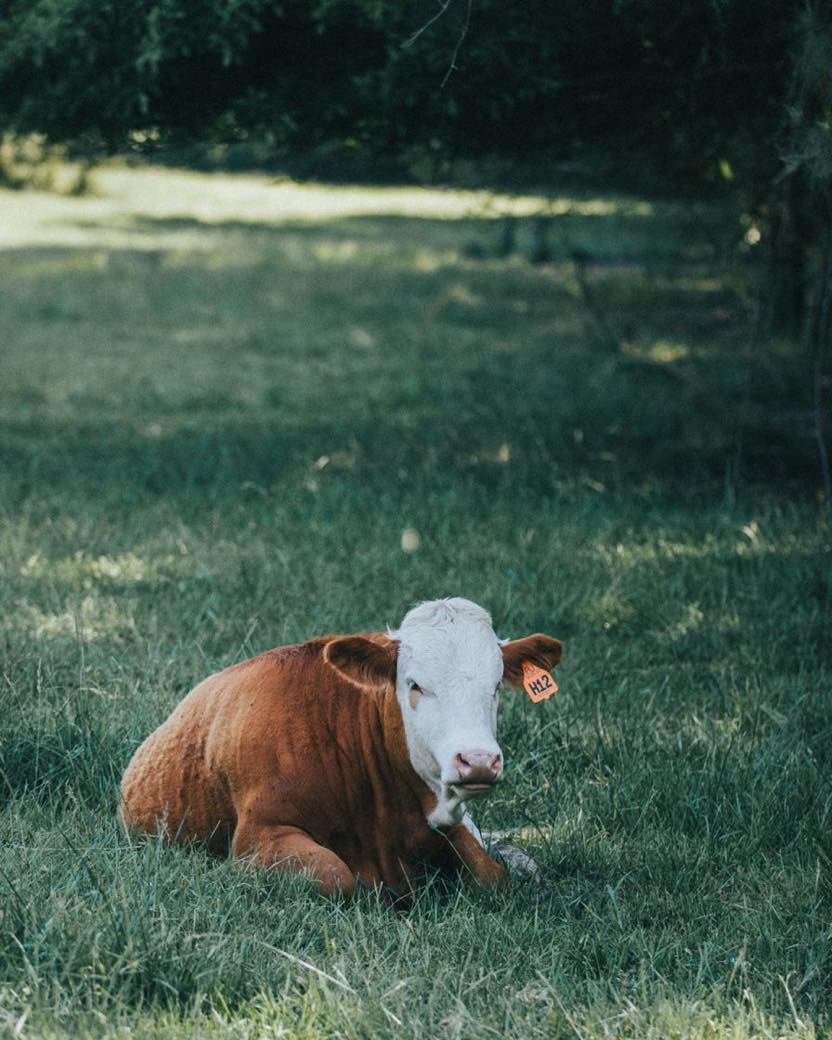
A livestock enterprise generates an event almost every day it operates. An animal is treated, weighed, moved, bred, sold; a group is fed, split, combined, culled. None of these events is hard to write down. The difficulty in livestock recordkeeping is almost never the individual entry. It is keeping every entry attached to the animal it describes, across the years it takes to become worth something.
A farm that records diligently but loses the thread of which animal ends up with a pile of true facts about nobody in particular. A farm that records less but keeps every event resolvable to a single identity can answer the questions that get asked — by a buyer, an auditor, a veterinarian, or next year’s version of you. This page is about that thread: the unit you record at, the identity you hang everything on, and the records — weight, breeding, feed — a farm most often keeps carelessly and most often needs later.
The authority is not this page. Where livestock records touch a regulated interval — a treatment withdrawal, a movement requirement, a residue tolerance — the label, your veterinarian, your certifier, and your regulator decide what you were required to do. A record proves what you did; it does not decide what was required. This page describes the process of keeping usable records, not the intervals themselves, and it never states a specific one. For the interval that governs a treatment, read the label and ask the person whose job it is to know.
The group is the unit of work; the animal is the unit of truth
Almost everything you do to livestock, you do to a group. You move a pen, you feed a lot, you vaccinate a batch that came in together. So the honest place to enter most events is against the group, because the group event is what actually happened; splitting one action into forty identical entries is fiction with better formatting.
But every question that matters later reaches an individual. A residue test comes back on one carcass; a recall names one lot; a breeding decision weighs one dam against another. The average of a group answers none of these, because none of them is about the average. This is the tension at the centre of livestock records: you act on groups and you are asked about animals.
The resolution is not to pick one. Record at the level you acted at, while making sure a group event can always be resolved back to the specific animals in the group on that date. The moment you cannot reconstruct membership, the group stops being a shortcut and becomes a place where individual history disappears.
Every event has to land on the same animal
Think of an animal as an identity, and everything you record as an event that has to attach to it: a health event, a treatment, a weight, a service or a birth, a ration. Each is easy to capture on its own; the value is not in any single one. It is in all of them resolving to the same identity, so that the treatment given in April, the weight taken in June, and the sale in October are demonstrably one animal, not three strangers.
That resolution is the whole value. Let the events float free of a shared identity and you have a treatment log, a scale book, and a breeding notebook that each describe a farm and none of which describe an animal. The identifier is not a clerical detail. It is the join that turns a heap of separate logs into a single history, and every argument that follows depends on it holding.
An ear tag is a primary key, and reusing one corrupts your history
The ear tag is doing a specific job, and it helps to name it plainly: it is a primary key — the one value every other record points back to. Treatment, weight, breeding, feed: each entry references it. It is the number that makes all the separate records be about one animal.
Which is why reusing a tag is so damaging, and why the damage is invisible at the moment you do it. When an animal leaves and you put its number on a new arrival, you have not saved a number. You have pointed every historical record that ever named that number at two different animals, with nothing in the data to separate them. A test result that lands on the number can no longer be traced to one carcass; a breeding lookup returns a mix of two lives. The history did not get shorter; it got untrue.
The rule is absolute: a tag number is spent once and never reissued. If a tag is lost, the animal gets a new number and the record notes the succession. A farm that reuses tags is not economising; it is corrupting the one field the rest of its recordkeeping is built on.
The weight record is the dataset your farm already has and never reads
Most livestock farms weigh far more often than they keep. Animals cross a scale at purchase, at handling, at intervals through the season, and at sale — and every figure but the last is thrown away. This is the most under-used dataset on a livestock farm: generated already, at no extra cost, and discarded on the way to the record.
A single weight is a price input. A series of weights is a performance signal — the closest thing a livestock enterprise has to a continuous read on how it is doing. Kept over time and attached to the animal, weights show which groups are gaining, which have stalled, and roughly when a change began. A dip that lines up with a health event or a ration change is the enterprise telling you something you cannot see any other way.
The discipline is small and the payoff is large: record every weighing, not only the one that sets a price, and attach it to the animal. The alternative is running an operation whose central performance measure is discarded the moment it stops being convenient. When you go to work out what a group actually cost to produce — the subject of farm finances — the retained weight series is the number the calculation hangs on.
Breeding is a chain of causation that outlives your memory of it
A breeding record is not an event. It is a chain, and the links are written years apart. A service date this spring means nothing until a pregnancy check confirms it, which means nothing until a birth, which means nothing until the offspring’s own performance in later seasons tells you whether the pairing was any good. The record only pays off at the far end of a span longer than your memory of how it started.
That length is what makes breeding records fragile. A missing sire, a birth logged against the wrong dam, an animal whose identity was overwritten by a reused tag — any one silently poisons every conclusion downstream. And because the poison does not show until the far end, you learn a link broke exactly when you needed the whole chain — too late to repair it.
So the discipline in breeding is not the entry, which is trivial. It is keeping the chain intact across time: recording the service with both parents identified, tying the birth back to the confirmed service, and never letting an identity underneath the chain change without a documented note. Kept this way, a breeding record lets you decide next year from evidence rather than from the two matings you happen to remember. Kept any other way, it is a diary that reads well and proves nothing.
Feed is the cost that never gets attributed
Feed is usually the largest single cost in a livestock enterprise, and the one most likely to be recorded in a way that makes it useless for decisions. Because it is bought in bulk and consumed continuously, feed tends to land in the books as one farm-level expense, attributable to everything and therefore to nothing. You know what feed cost the farm. You do not know what it cost any animal.
The fix is to record feed the way you record any other group event: this ration, this quantity, this lot, fed to this group, on this date. That turns feed from an accounting total into an attributable cost. And once feed is attributed to a group, it can be set beside that same group’s weight series — the two records finally in the same frame — so a cost of gain has something concrete to compute from: two real records about the same animals, not an estimate.
The lot number on the ration matters for the same reason it matters on a treatment. If a feed is later recalled or implicated in a residue finding, the only way to know which animals ate it is to have written down which group got which lot, on which day. Feed attribution is a cost tool and a traceability record at once — reason enough to capture it at feeding rather than reconstructing it from delivery notes in December.
History dies at the moment of transfer
Livestock history most often fails somewhere else entirely: at transfer. An animal is where records break — when it moves between groups, between farms, or between owners, the history attached to it has to move too, and that is the handoff that gets dropped. The identity stays intact; the record that should have travelled with it does not.
Consider the ordinary cases. An animal is moved between pens and the group membership is not updated, so a later group event lands on animals that were no longer there. A group is split for sale and half the history stays with the wrong half. An animal is sold, and everything you knew about it — treatments, weights, parentage — stops at your gate, exactly where the buyer most needs it. A transfer is a moment when identity survives and provenance evaporates, and none of it feels like a recordkeeping failure while it happens.
The sharpest version is a sale made while a group sits inside a treatment withdrawal window — the interval, set by the label and the veterinarian, that must pass before an animal may enter the food supply. That window is exactly what gets forgotten at transfer, because the person loading the trailer is rarely the person who wrote the treatment down. We treat that failure at length in the withdrawal-period guide and across the withdrawal & residue cluster; the point here is only that the danger concentrates at transfer, where the record and the reality are most likely to part ways.
The strongest defence is a record that refuses to let the transfer happen while the history says it shouldn’t. This is one thing Farm40enforces directly: when a livestock sale is entered while the group sits inside an active withdrawal window, the sale row is never written — not a warning you can dismiss, but a record the application declines to create. The limit belongs in the same breath: it is a rule in the application, not a constraint in the database, so it governs sales entered through the app and nothing else. It cannot reach past your gate to stop an animal that leaves on a handshake and a scribbled receipt. No software can. What it can do is make the honest transfer the easy one.
Where livestock records meet the rest of the farm
None of this stands on its own. The same animal whose weight and breeding you track also carries treatments that feed your residue discipline, feed lots that feed your traceability, and costs that feed your accounting. The thread that keeps events attached to an identity is the same one that lets a livestock enterprise answer to a buyer or an auditor at all — the broader subject of farm recordkeeping as a whole.
And almost none of it requires software. It requires a tag number spent once and never reused, an event that always resolves to that number, a weight series that is kept, a breeding chain whose links stay attached, feed attributed to the group that ate it, and a transfer that carries the history with the animal. Those are habits, not features — and the hardest to hold, the one that decides whether the whole system is true, is the transfer, where an animal leaves and its history is supposed to leave with it.