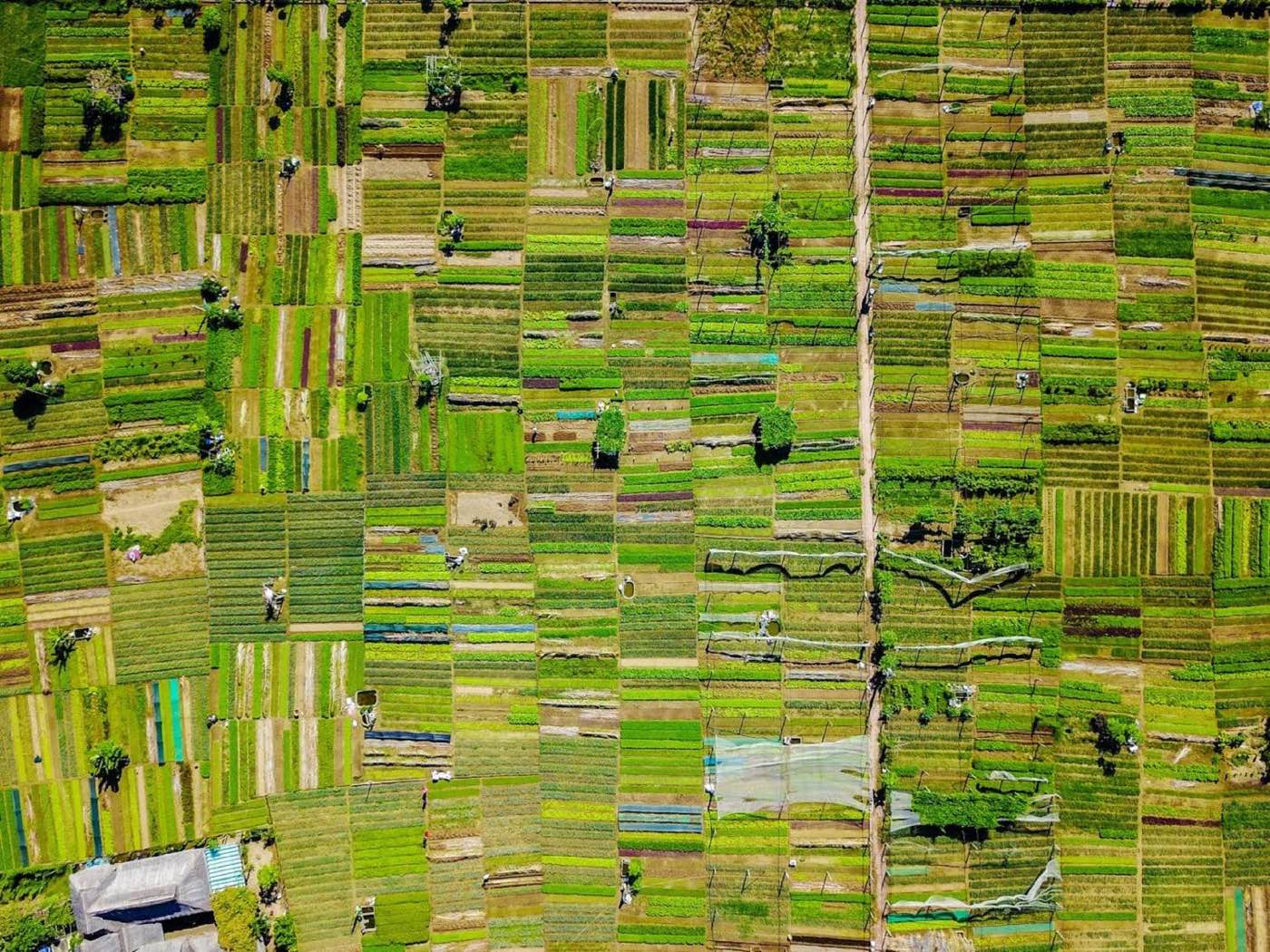
Most farm software is written from a side. Somebody built a crop product and later added a livestock module, or built a livestock product and later bolted on fields and plantings, and the seam between the two shows almost immediately to a farm that actually runs both. The screens for the side that came first feel native. The screens for the side that came second feel like an afterthought, because they were one.
A genuinely mixed operation — row crops and a cow herd, pasture and produce, a market garden with a few dozen laying hens — is not an edge case. It is a common shape of American and Canadian farming, and it deserves software that treats both halves as first-class, not one product with a plugin. This page is about where a mixed operation's needs diverge from a single-enterprise farm's, and how to tell, evaluating a product, whether it was actually designed for the mix or merely extended to tolerate it — a narrower version of the test laid out in how to choose farm software honestly.
Read this knowing who wrote it. This page compares how software handles mixed crop-and-livestock operations and is published by a company that sells farm management software for both. Hold the claims here to the same scrutiny you would apply to any vendor's.
The tell is where the enterprises actually touch
Crops and livestock are not separate on a mixed operation; they feed each other constantly. Manure from the barn becomes an input applied to a field. Pasture is itself a crop with its own grazing record. A cover crop gets grazed rather than harvested. Labor hours split across both in the same afternoon — morning in the barn, afternoon in the field. Software built from one side and extended to the other almost never models these connections, because the architecture was decided before the second side existed, and the shared ground between crops and livestock was never part of the original design.
The fastest way to test this is to try to answer one specific question in a product: what did it cost to raise this year's calves, including the feed grown on your own ground. If the software can only answer that by having you separately total a livestock report and a crop report and add them together yourself, it has not really unified the two enterprises. It has parked them next to each other, and any question that spans the boundary between them becomes your job to answer, not the software's.
Shared ground needs to be one record, not two
Pasture is the clearest case. It is grazing land to the livestock side of an operation and a crop — with its own planting, management, and yield in grazed forage — to the other. A product built only for row crops treats pasture awkwardly, if at all. A product built only for livestock treats it as an attribute of the herd rather than a piece of ground with its own history. Software that actually serves a mixed operation has to let a single field be both: grazed by a group and managed as a crop, with one record rather than a crop entry in one module and a grazing entry in another that never reference each other.
The same is true of labor split across enterprises: a person who spends a morning in the barn and an afternoon in the field should log hours against both, in one system, rather than keeping a separate labor sheet for each side and reconciling them later.
Two separate systems is a legitimate answer, with a real cost
Running a dedicated crop system alongside a dedicated livestock system is a reasonable choice if each one genuinely does its own side better than any combined product manages both. It is worth being honest about the price of that choice: every point where the two enterprises actually touch — shared ground, shared labor, shared cost, a nitrogen credit from manure applied to a field — now has to be reconciled by hand between two places instead of recorded once. That reconciliation is exactly the kind of second-desk work covered in why farm software rollouts fail, and it tends to be the first thing that stops happening once the season gets busy.
Traceability has to cross the boundary too
A buyer or a certifier asking for a traceability packet on a mixed operation often needs a chain that crosses both sides at once — a finished product that used feed grown on the farm, or a crop input record that includes manure from the herd. Software that keeps crops and livestock in genuinely separate systems can usually produce a traceability packet for either side alone; producing one that spans both requires someone manually stitching two exports together, which is exactly the kind of manual reconciliation discussed above, and exactly the point in an audit where an otherwise solid farm looks disorganised. The broader discipline is covered in traceability as a whole; a mixed operation just has more places the chain has to cross.
Pricing should charge for the farm, not for each side of it
Watch for pricing that penalizes exactly the diversification that makes a mixed operation resilient — a separate module fee for livestock on top of the crop plan, as though running two enterprises on one piece of ground is two customers rather than one. A plan that gates by the number of farms, rather than by enterprise or module, treats a mixed operation the same as a single-enterprise one of the same size, which is the fairer comparison: the software's job did not get harder because your farm diversified, only different.
What Farm40 does here, and where it stops
Farm40 models crop and livestock records inside the same farm rather than as separate add-on modules, so a pasture can carry both a grazing history and a management record, and a manure application can show up as an input on the crop side while remaining tied to the group that produced it. The 7-day card-on-file trial gives every module with $0 due today, and the flat paid plan keeps crops and livestock together without a separate module charge. The limit: Farm40 is a young product built by a small team, and while both sides are first-class in the data model, the depth of either one alone will not match a tool built for nothing else. If your operation is genuinely all crops or all livestock, a specialist product may go deeper on that single side than a mixed-operation tool ever will — which is worth weighing honestly against the reconciliation cost of running two systems, covered above.